
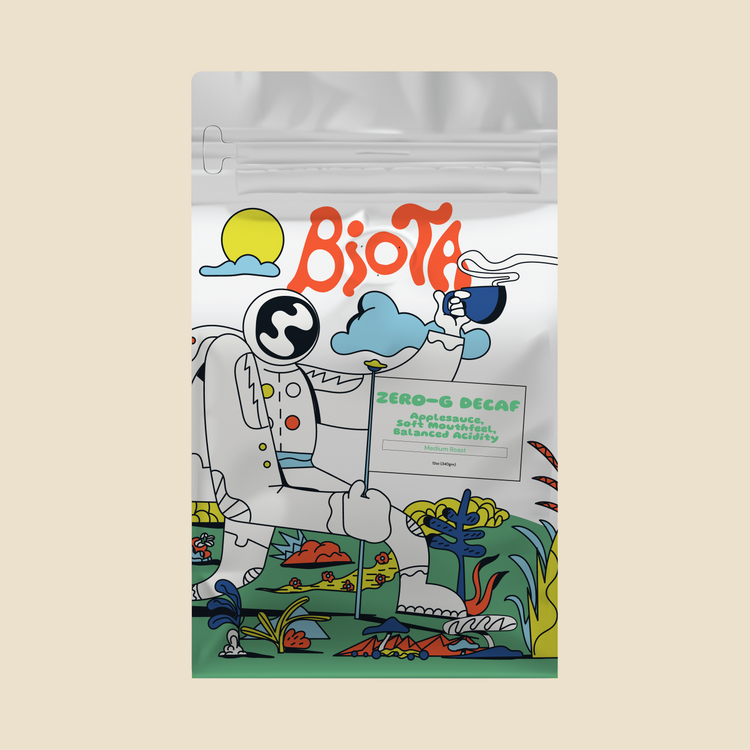
Zero-G Decaf
Stewed apple, Soft mouthfeel, Heirloom tomato
12oz bag
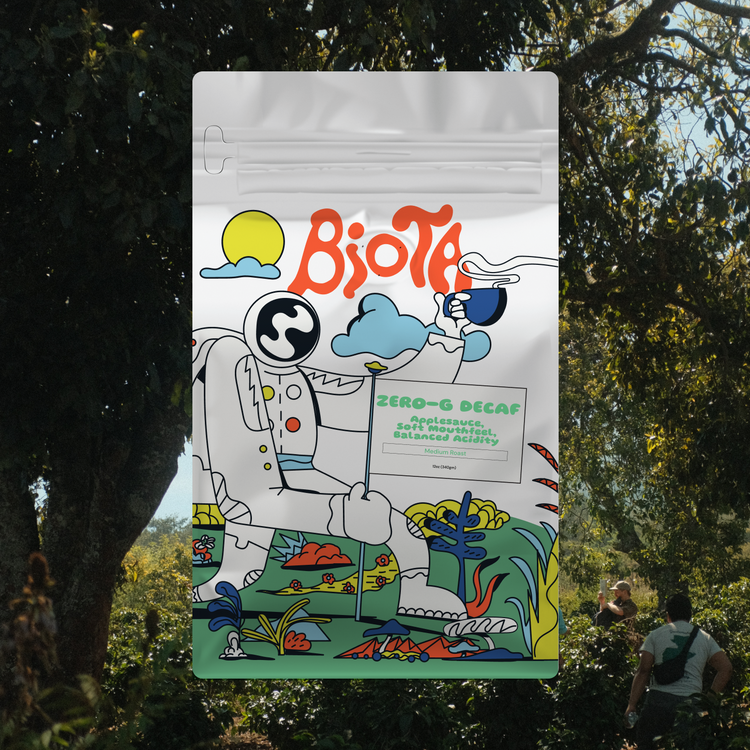
Zero-G is a beautiful decaf grown in partnership with our friends 1600-1800 meters above sea level in Huila, Colombia. As a medium roast, this coffee performs well as an espresso or filter, yielding a balanced cup with a soft mouthfeel and balanced acidity.
- Regular price
- $22.00
- Sale price
- $22.00
- Regular price
What's inside:
Grind
This item is a recurring or deferred purchase. By continuing, I agree to the cancellation policy and authorize you to charge my payment method at the prices, frequency and dates listed on this page until my order is fulfilled or I cancel, if permitted.
Shipping Information
We ship to the lower 48 states of America and charge a flat rate of $4.00 per order. Our light roast coffee has a blue sticker, and the dark roast has an orange sticker. Biota’s 1x per month subscription includes two 12 oz. bags. Orders placed by Tuesday at midnight are roasted + packed on Wednesdays and shipped via USPS on Thursday mornings. All other orders are fulfilled on a rolling basis.
Shipping Information
We ship to the lower 48 states of America and charge a flat rate of $4.00 per order. Our light roast coffee has a blue sticker, and the dark roast has an orange sticker. Biota’s 1x per month subscription includes two 12 oz. bags. Orders placed by Tuesday at midnight are roasted + packed on Wednesdays and shipped via USPS on Thursday mornings. All other orders are fulfilled on a rolling basis.
Couldn't load pickup availability


FlavorProfile
Huila, Colombia
Sugarcane Decaffeination
Applesauce, Soft Mouthfeel, Heirloom Tomato
One Year
$4.50 FOB (Free On Board)/lb – Price Biota paid farmers directly for Zero-G
$2.79/lb – Fair Trade Certified Minimum
$2.44/lb – Average C Market Price
Behind the Beans
The green coffee that makes its way into Zero-G was grown in partnership with Equation Coffee and contributes to their Soil Revolution Fund, which reinvests 5¢ per pound of coffee sold into technical support to help small-scale farmers in Colombia promote soil regeneration.
They do so by intercropping coffee plants with beans to fix nitrogen in the soil, establishing vermicompost systems to replace chemical fertilizers, and planting native shade trees.

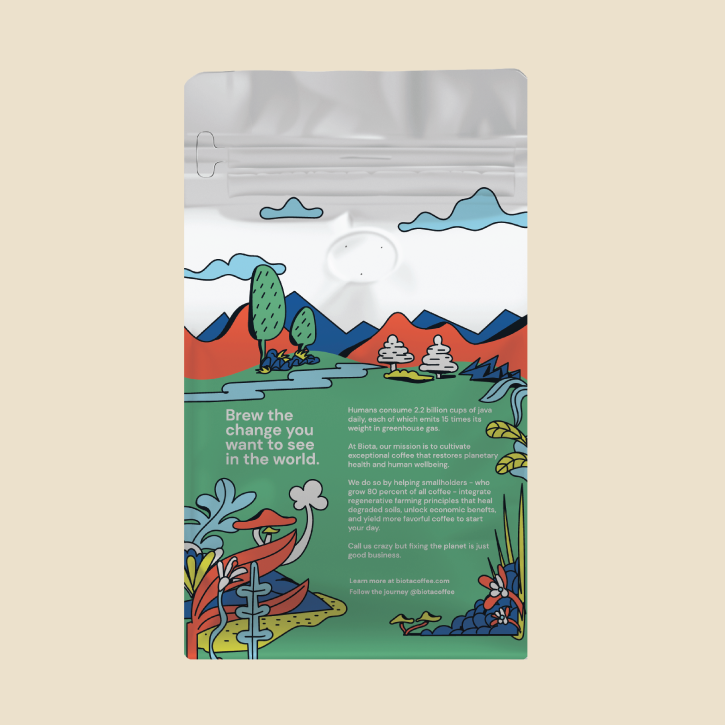
OUR PLAN TO SCALE REGENERATIVE AGRICULTURE: MAKE IT TASTE BETTER.

We work with farmers to implement regenerative agricultural practices

We buy their coffee, paying generous premiums for their environmental stewardship

We roast the coffee to exacting standards, highlighting the best of each bean

We ship the coffee directly to you– ensuring the freshest coffee at the best price